Your Questions, Answered: Tips for Veterinary Students and First-Year Veterinarians
September 9, 2025
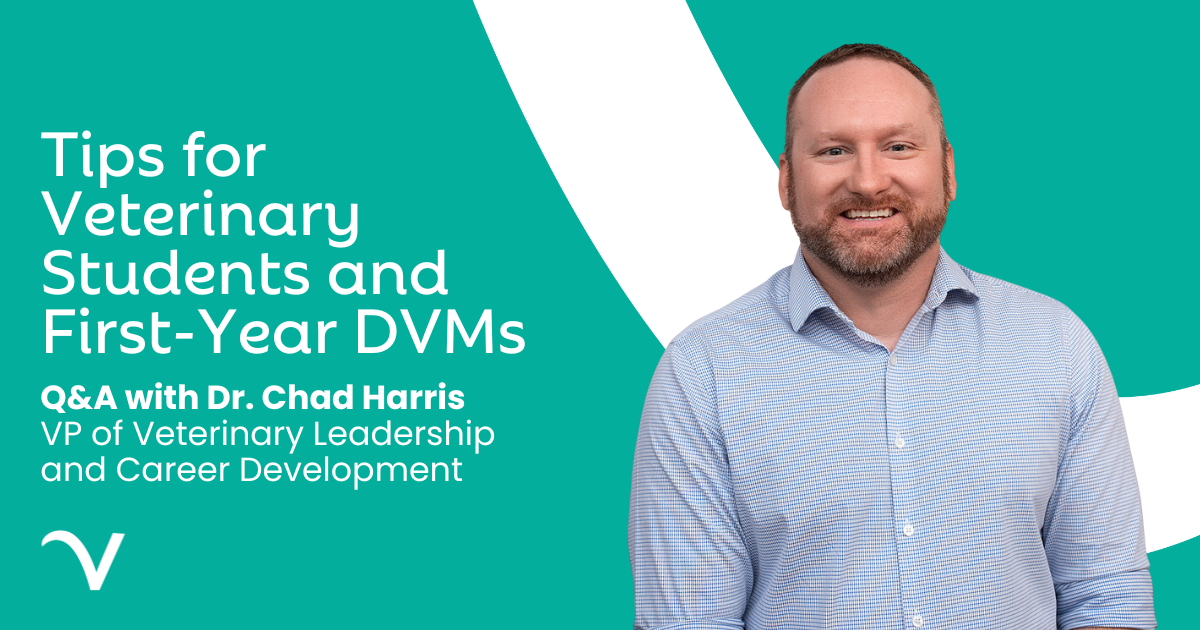
Navigating the transition from veterinary student to new graduate to early career veterinarian can bring a whirlwind of emotions and questions. To help, we asked Dr. Chad Harris, Vice President of Veterinary Leadership and Career Development, to share his insight. With a career journey that spans from an associate veterinarian to pivotal leadership roles at Vetcor, Dr. Harris offers a unique and valuable perspective. In this exclusive Q&A, he shares his advice on common challenges, career development, and building a thriving life in veterinary medicine.
Advice for Veterinary Students
What tips do you have for studying for the NAVLE?
Studying for the NAVLE can feel overwhelming, but with the right mindset and strategy, it’s absolutely manageable. Here are a few tips I often share with students and new grads:
- Start Early, Plan Smart: Give yourself plenty of time. Ideally 3 to 4 months before your test date. Create a realistic study schedule that breaks down topics into manageable chunks. Consistency beats cramming every time.
- Use Trusted Resources: Stick with well-established study tools like Zuku Review, VetPrep, and the NAVLE practice exams from the ICVA. These resources are designed to mirror the format and content of the actual exam.
- Practice, Practice, Practice: Doing practice questions is key. It helps you get comfortable with the question style and identify areas where you need more review. Make sure to review the explanations, even for questions you got right.
- Focus on Clinical Reasoning: The NAVLE isn’t just about memorizing facts—it’s about applying knowledge in clinical scenarios. Think through cases logically and practice making decisions based on limited information, just like you would in real life.
- Don’t Neglect Self-Care: Studying is important, but so is your well-being. Take breaks, get enough sleep, eat well, and stay active. A healthy mind performs better under pressure.
- Lean on Your Support System: Talk to classmates, mentors, or recent grads who’ve taken the NAVLE. Their insights and encouragement can be incredibly helpful—and remind you that you’re not alone in this journey.
Remember, the NAVLE is just one step in your veterinary career. Prepare well, trust your training, and know that you’ve got what it takes to succeed.
How should new graduates negotiate their first salary?
Negotiating your first salary is an important milestone, and while it can feel daunting, it’s also a chance to advocate for yourself and set the tone for your professional journey. Start by understanding your value. Your education, clinical training, and potential all contribute to what you bring to the table. Do your research on average starting salaries in your region using resources like AVMA, so you have a solid benchmark. When reviewing an offer, look beyond the base salary and consider the full compensation package, including benefits like health insurance, CE allowances, mentorship opportunities, and PTO. Asking thoughtful questions about how compensation is structured and how performance is evaluated shows maturity and helps you make an informed decision. Practicing the conversation with a mentor or trusted colleague can also boost your confidence. Most importantly, approach the negotiation professionally and positively. Remember, it’s not about confrontation, but collaboration. Express appreciation for the offer, share your perspective respectfully, and be open to discussion. Your first job is a stepping stone on a long career, so focus on finding a role that supports your growth and aligns with your long-term goals.
What questions should new graduates ask during the interview process to help determine if a clinic is a good fit for them?
When interviewing for your first veterinary position, it’s important to ask questions that go beyond the job description and help you understand the clinic’s culture, values, and support systems. Start by asking about mentorship and how it fits with your needs. I would ask how it’s structured, who will be guiding you, and how feedback is delivered. Inquire about the team dynamic and how collaboration is encouraged among doctors, technicians, and support staff. Ask about the clinic’s approach to mental well-being, scheduling, and how they handle high caseloads or emergencies. It’s also helpful to understand how professional development is supported, including CE opportunities, leadership growth, and long-term career pathways. Don’t hesitate to ask about the clinic’s philosophy on patient care and client communication—these insights can reveal whether your values align. Ultimately, the goal is to find a place where you feel supported, respected, and excited to grow as a veterinarian.
What should new graduates look for in their first career mentor?
A great mentor can be an important part of your early career, offering guidance, support, and perspective as you transition into practice. Look for someone who is not only clinically skilled but also approachable, patient, and genuinely invested in your growth. They should be willing to teach through both successes and setbacks, encourage questions, and provide constructive feedback that builds your confidence. Open communication is key. Take time to share what mentorship means to you and what kind of support you’re hoping for. This helps your mentor understand how best to guide you and ensures your expectations are aligned. A strong mentor also models professionalism, resilience, and effective communication, giving you insight into how to navigate the complexities of veterinary medicine. Most importantly, they should respect your goals and help you explore your interests, whether in clinical practice, leadership, or beyond. The right mentor won’t just help you grow as a veterinarian; they’ll help you thrive.
Advice for First-Year Veterinarians
How can a new veterinarian make the most of their first year to ensure they become a valuable asset to their clinic and team?
Your first year in practice is a powerful opportunity to lay the foundation for a successful and fulfilling career. To make the most of it, approach each day with curiosity, humility, and a willingness to learn. Be proactive by asking questions, seeking feedback, and engaging in cases that challenge you. Show up prepared, be dependable, and take ownership of your growth. Building strong relationships with your team is just as important as developing clinical skills. Respect and support your colleagues, communicate openly, and contribute to a positive work environment. Sharing your goals and interests helps your team understand how to support you and where you can add unique value. Stay organized, reflect on your experiences, and celebrate small wins along the way. The more engaged and adaptable you are, the more you’ll grow, and the more indispensable you’ll become to your clinic and your clients.
What would you say to a first-year veterinarian who is struggling after making a mistake?
First, I would say that you’re not alone. Every veterinarian, no matter how experienced, has made mistakes. It’s part of the learning process and part of being human. What matters most is how you respond. Take time to reflect, acknowledge what happened, and focus on what you can learn from the experience. Mistakes can be powerful teachers if you allow them to guide growth rather than fuel self-doubt. Having open communication with your Chief of Staff and Chief of Staff Advisor can be incredibly helpful as they are there to support you, offer perspective, and help you navigate challenges with confidence. Sharing your experience not only helps you process it but also builds trust and resilience. Your value as a veterinarian isn’t defined by one moment. Instead, it’s shaped by your integrity, your willingness to improve, and your commitment to your patients and your team. Give yourself grace, stay curious, and keep moving forward. You’re growing, and that’s exactly what this stage of your career is all about.
What Vetcor perks and benefits are most beneficial for first-year veterinarians?
Vetcor offers a wide range of benefits that are especially valuable to first-year veterinarians as they transition into practice. In addition to the typical offerings like competitive compensation, health insurance, paid time off, and continuing education support, Vetcor places a strong emphasis on mentorship and professional development. Each hospital provides mentorship tailored to the needs of new grads, and our Chief of Staff Advisors offer additional guidance, helping early-career veterinarians navigate challenges and build confidence. One unique benefit is our VetLife Days. Every full-time veterinarian is eligible for one VetLife Day per quarter, which doesn’t count against CE or vacation time. These days allow you to spend time at another Vetcor hospital to observe different workflows, learn new skills, seek inspiration, or simply recharge. We also host new grad topic rounds that create space for learning, connection, and shared experiences among peers. These resources are designed to support not just your clinical growth, but your overall well-being and career satisfaction. Vetcor is committed to helping you thrive, both in your first year and beyond.
What is something you wish you knew or had done differently as a first-year veterinarian?
If I could go back, I’d remind myself to celebrate my wins, no matter how small, and to give myself grace for not being perfect. As a first-year veterinarian, it’s easy to focus on what you don’t know or what didn’t go exactly right, but every successful case, every moment of growth, and every connection with a client or patient deserves recognition. I wish I had taken more time to acknowledge those moments and let them build my confidence. I also would have been kinder to myself when things didn’t go as planned. Mistakes are part of the journey, not a reflection of your worth or potential. Having open communication with your Chief of Staff and Chief of Staff Advisor can help you process those moments and gain perspective. They are there to support you, guide you, and remind you that you’re not expected to have all the answers right away. Progress takes time, and perfection isn’t the goal. Growth, resilience, and self-compassion are the name of the game!
To all the new doctors and aspiring veterinarians, remember that your journey has just begun. Vetcor is excited to see the incredible impact you'll have on the profession and the lives of animals. We wish you the best on this journey and encourage you to visit our careers page to learn more about opportunities at Vetcor.