How to Become a Veterinary Technician: A Complete Guide
January 1, 2026
Becoming a veterinary technician is a rewarding career path for animal lovers who want to be deeply involved in the medical care of animals. Vet techs are essentially the nurses of the veterinary world, and they play a crucial role in a veterinary clinic's day-to-day operations. For those interested in pursuing a career as a veterinary technician, here's a complete guide to help you get started on your journey.
Understanding the Difference: Veterinary Assistant vs. Veterinary Technician
It's common to confuse these two roles, but they have distinct differences in education, responsibilities, and legal standing.
Education
Veterinary assistants usually require a high school diploma or GED. Some individuals might complete a certificate program, but it is not a universal requirement. Assistants receive most of their training on the job, and certification as a veterinary assistant, while available, is not typically mandatory. Veterinary technicians, on the other hand, undergo additional training, which we’ll touch on more below.
Responsibilities
Veterinary technicians perform medical tests that assist the veterinarian in diagnosing illnesses and injuries. Their duties might include drawing blood, placing catheters, assisting in surgery, administering anesthesia, and taking x-rays. Veterinary assistants primarily assist veterinary technicians and veterinarians. Common responsibilities include cleaning and maintaining equipment, feeding and bathing animals, helping to restrain animals during procedures, and performing basic lab work.
The Purdue University College of Veterinary Medicine has an excellent resource for those interested in learning more about the differences between an assistant and a technician.
Education and Certification Requirements
The first step to becoming a vet tech is completing a program accredited by the American Veterinary Medical Association (AVMA) or, in Canada, the Canadian Veterinary Medical Association (CVMA). These programs typically lead to an associate's degree and cover a range of subjects, including animal anatomy, pharmacology, surgical nursing, and more. Some programs also offer a bachelor's degree. At Vetcor, we’re committed to helping our technicians grow, so we offer tuition assistance, continuing education opportunities, and various programming to support skill development! Learn more about our TechLife benefits here.
 Check out this first-hand reflection from Elisabeth, a lead technician at Ridgeville Animal Hospital, who received support from Vetcor to continue learning and growing in her career:
"When I first joined Ridgeville in 2014, I was an assistant who had graduated from tech school but had never taken the VTNE. Through the encouragement of my hospital leadership, I decided it was time to take on more responsibility and finally take my VTNE. Vetcor provided me with financial support for a study program to prepare, and even helped with the cost of taking the test itself and continuing education afterward.”
After graduating, you'll need to pass the Veterinary Technician National Examination (VTNE), which is administered by the American Association of Veterinary State Boards (AAVSB). This is a standardized exam that assesses your competency to practice. It is a test comprised of 170 questions across nine major subjects like anesthesia, pharmacy, dentistry, and laboratory procedures.
-
Access content and study materials to prep for the VTNE
State-Specific Requirements
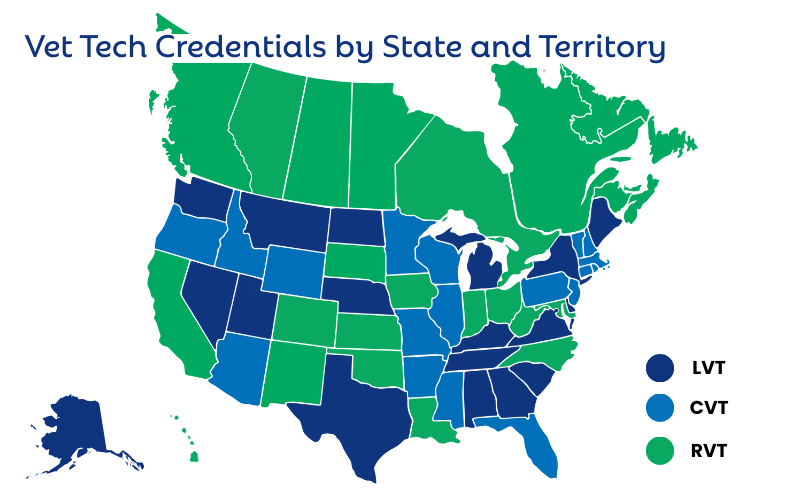
Once you've passed the VTNE, you'll need to meet your state's specific requirements to become a credentialed vet tech. The title you earn will vary by state, as some states certify veterinary technicians (CVT), others license them (LVT), and some register them (RVT). Each state's veterinary medical board has its own application process, which may include additional fees, background checks, or state-specific exams.
-
Explore what it takes in your state to become a certified, registered, or licensed technician here
Canadian Requirements
In Canada, the path is similar. You must graduate from a CVMA-accredited program and pass the VTNE. You'll then register with your provincial association to become a Registered Veterinary Technologist/Technician (RVT). The specific title (technician vs. technologist) may depend on the province.
A Day in the Life: Key Roles and Skills
A vet tech's day is dynamic and requires a diverse set of skills. While each state (or province) has different guidelines and restrictions, your responsibilities may include:
-
Patient Care: Performing physical exams, monitoring vital signs, and providing nursing care
-
Surgical Assistance: Preparing animals for surgery, monitoring anesthesia, and assisting the veterinarian during procedures
-
Diagnostic Testing: Drawing blood, collecting other samples, and performing lab tests like urinalysis
-
Client Communication: Educating pet owners on their animal's condition, treatment plans, and at-home care
-
Administrative Tasks: Maintaining accurate medical records and other paperwork
To excel in this role, you'll need to possess a blend of technical and personal skills, including compassion, attention to detail, manual dexterity, and strong communication skills.
Shaping Culture and Driving Success
Veterinary technicians are essential to the success of a veterinary practice, playing a dynamic role that goes beyond clinical duties. By serving as skilled medical professionals, communicators, and cultural anchors, they directly influence the practice's efficiency, team morale, and capacity to deliver excellent care. Their contributions are fundamental to elevating medical standards, fostering client trust, and ultimately ensuring the health and well-being of more pets in the community.
Career Pathways
Many individuals are happy in their role and find career satisfaction as lifelong veterinary technicians. Others may choose to gradually increase responsibility at their clinic by becoming lead technicians or Hospital Managers. There are also opportunities for technicians to specialize or return to school to earn their Doctorate of Veterinary Medicine.
-
New to vetmed? Explore our careers page to find open Veterinary Assistant positions
-
Experienced technician? Explore our career opportunities and see what TechLife is like at Vetcor